
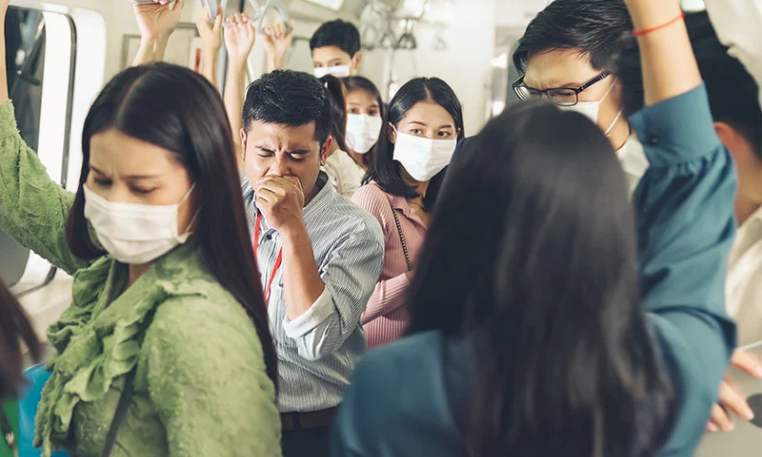
Infectious particles can accumulate in occupied indoor environments and expose multiple individuals, even without direct physical contact.
Airborne pathogens can spread through microscopic respiratory particles released when people breathe, speak, cough, or sneeze. Because many of these aerosols can remain suspended in the air for extended periods, they may expose people even without close or direct contact with an infected individual. This makes airborne transmission particularly difficult to control in enclosed indoor spaces, where infectious particles can accumulate and circulate through shared air.
Several factors determine how easily airborne pathogens spread, including particle size, ventilation, humidity, exposure time, and the number of people occupying a space. Poor ventilation can allow infectious aerosols to build up, while improved airflow and filtration can reduce their concentration. Because pathogens can remain airborne and move throughout a room, technologies that continuously address microorganisms in the air may offer an additional layer of protection alongside traditional ventilation and filtration strategies.
A wide range of infectious diseases can be transmitted through airborne or aerosolized particles, including influenza, COVID-19, measles, chickenpox, and tuberculosis. Other pathogens, such as Legionella, can become airborne through contaminated water droplets or mist. Since some infectious particles may remain in the environment after an infected person has left, reducing pathogen concentrations directly in the air can be an important part of limiting transmission.
Indoor environments such as hospitals, schools, public transportation systems, workplaces, and other crowded facilities can be especially vulnerable to airborne disease spread. Activities such as talking loudly, singing, exercising, or performing certain medical procedures may release greater quantities of respiratory particles into the air.
Reducing the risk of airborne infection typically requires a combination of preventive measures rather than a single solution. Ventilation, air filtration, appropriate respiratory protection, and other infection-control practices all play important roles. Far-UVC can potentially strengthen this layered approach by targeting infectious microorganisms directly in the air, helping reduce the concentration of viable pathogens and supporting healthier indoor environments without replacing established air quality and public health measures.