
Contamination control, Risk Management, and Quality Management when monitoring UV-C in HVAC Systems
UV-C technology is becoming an increasingly important part of contamination control in pharmaceutical manufacturing and healthcare environments, particularly when incorporated into HVAC systems. These facilities depend heavily on controlled airflow, temperature, humidity, pressure, and filtration to protect products, patients, and critical processes from contamination. As UV-C is added as another layer of microbial control, it must be argued that it’s performance should be monitored with the same level of attention given to other important HVAC parameters.
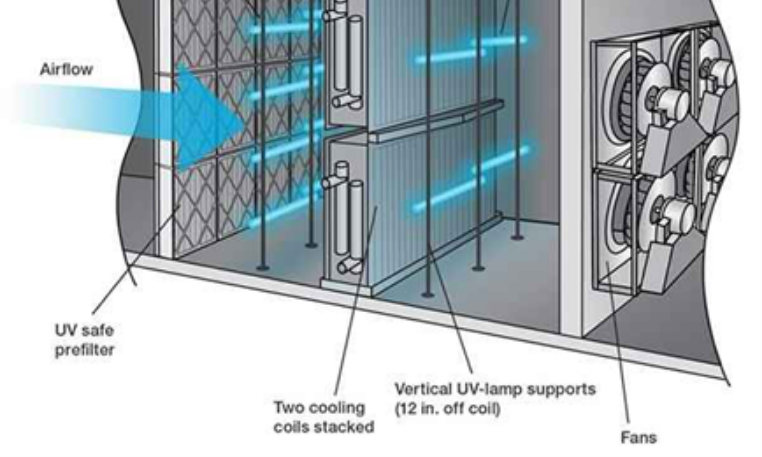
UV-C systems installed within HVAC equipment can help reduce microorganisms both in moving air and on surfaces such as cooling coils, drain pans, and ductwork. Germicidal UV-C works by damaging the genetic material of microorganisms, preventing them from reproducing. This technology can supplement filtration and other environmental controls by limiting airborne pathogens and preventing microbial growth or biofilm from accumulating inside HVAC equipment.
However, simply installing UV-C equipment does not guarantee that it will continue providing the intended level of disinfection. UV output can decline as lamps age, while dust, moisture, or other deposits can block UV radiation and reduce its effectiveness. Changes in airflow, temperature, and humidity also can affect how much UV exposure microorganisms actually receive. Without monitoring, a system may appear to be functioning normally even though the delivered germicidal dose has fallen below the level required for effective microbial control.
For this reason, dedicated UV sensors and monitoring systems can provide valuable information about UV intensity, dose, and overall system performance. Continuous or periodic measurements allow facility operators to identify declining lamp output or contamination before it becomes a significant problem. Monitoring data also can support alarms, predictive maintenance, system qualification, validation, and regulatory documentation. When integrated with building automation systems, UV performance can be evaluated alongside HVAC variables such as temperature, pressure, humidity, airflow, filter condition, and air-change rates.
Ultimately, UV monitoring does provide operational and financial advantages. Measuring actual UV output can help facilities determine when lamps truly need replacement, maintain cleaner and more efficient HVAC coils, reduce unexpected system failures, and lower the risk of contamination-related shutdowns or product losses. As people increasingly adopt technologies such as UV-C LEDs, Far UV-C, and other advanced air-treatment systems, reliable monitoring will become increasingly important for demonstrating that these technologies consistently perform as intended. Overall, UV monitoring remains an essential component of a measurable, documented, and risk-based contamination-control strategy, and it must be noted that UV-C isn’t a technology that can simply be installed and left unverified.