
THOUGHT LEADERSHIP | CATALYTIC PHILANTHROPY
One Room Can Change the World
How philanthropic capital can protect the air we share—and compound into systemic change
PJ Piper | CEO, Far UV Technologies | September 2026
Disclosure and Model Access: The author is President and CEO of Far UV Technologies, Inc., which develops, manufactures and installs engineering controls such as 222 nm far-UVC, 254 nm Upper Room germicidal and HEPA filtration systems. The costs, health impacts and Return on Altruism estimates presented here are illustrative planning ranges—not product prices, quotations, clinical findings or guaranteed returns. Public inputs have been rounded and aggregated across technologies, room types, installation conditions, controls, monitoring, maintenance and evaluation requirements to protect confidential commercial information. Range endpoints are independent sensitivity bounds and should not be combined to infer the price of a specific configuration. A separate editable diligence model, including assumptions, calculations and sources, is available upon request to established philanthropic organizations evaluating engineering controls, subject to appropriate confidentiality and use protections.
At some point, the question changes. For years, success may be measured by a career built, a family raised, a business grown or financial security achieved. Later—particularly as people approach retirement or gain more control over their time—a different question emerges: What difference did I make, and what difference could I still make?
That is an economic question, not because every human benefit should be reduced to dollars, but because every philanthropist works with scarce resources. Money, time, influence, expertise and relationships all have opportunity costs. Effective Altruism brings discipline to that choice by asking where an incremental dollar or hour can accomplish the most good. Its familiar lens—importance, tractability and neglectedness—now guides major philanthropic institutions as well as individual donors.
Through that lens, the air we share deserves far more attention. Airborne infection is global in scale; engineering controls can reduce infectious material indoors; and most occupied buildings still do little specifically designed to disinfect shared air continuously. The opportunity is not only to buy equipment. It is to fund a chain of evidence and adoption that can begin with one room and ultimately change how society protects indoor life.
The Scale of Neglect Is Hiding in Plain Sight
COVID-19 made the economic value of healthy human participation impossible to miss. In June 2020, the International Monetary Fund projected more than $12 trillion in cumulative global output loss for 2020 and 2021. That estimate reflected disease, fear, behavioral change, restrictions and disruption—not medical bills alone. When people cannot safely share space, economic and social systems fail together.
The leakage continues in ordinary years through influenza, RSV, COVID-19, rhinovirus, tuberculosis and other infections. During the 2024–2025 U.S. respiratory season, the U.S. Centers for Disease Control and Prevention (CDC) estimated at least one million hospitalizations and more than 70,000 deaths from influenza, COVID-19 and RSV. These figures do not capture every infection, missed day, caregiver absence or downstream consequence. Most individual cases look ordinary; aggregated across families, employers and communities, they are enormous.
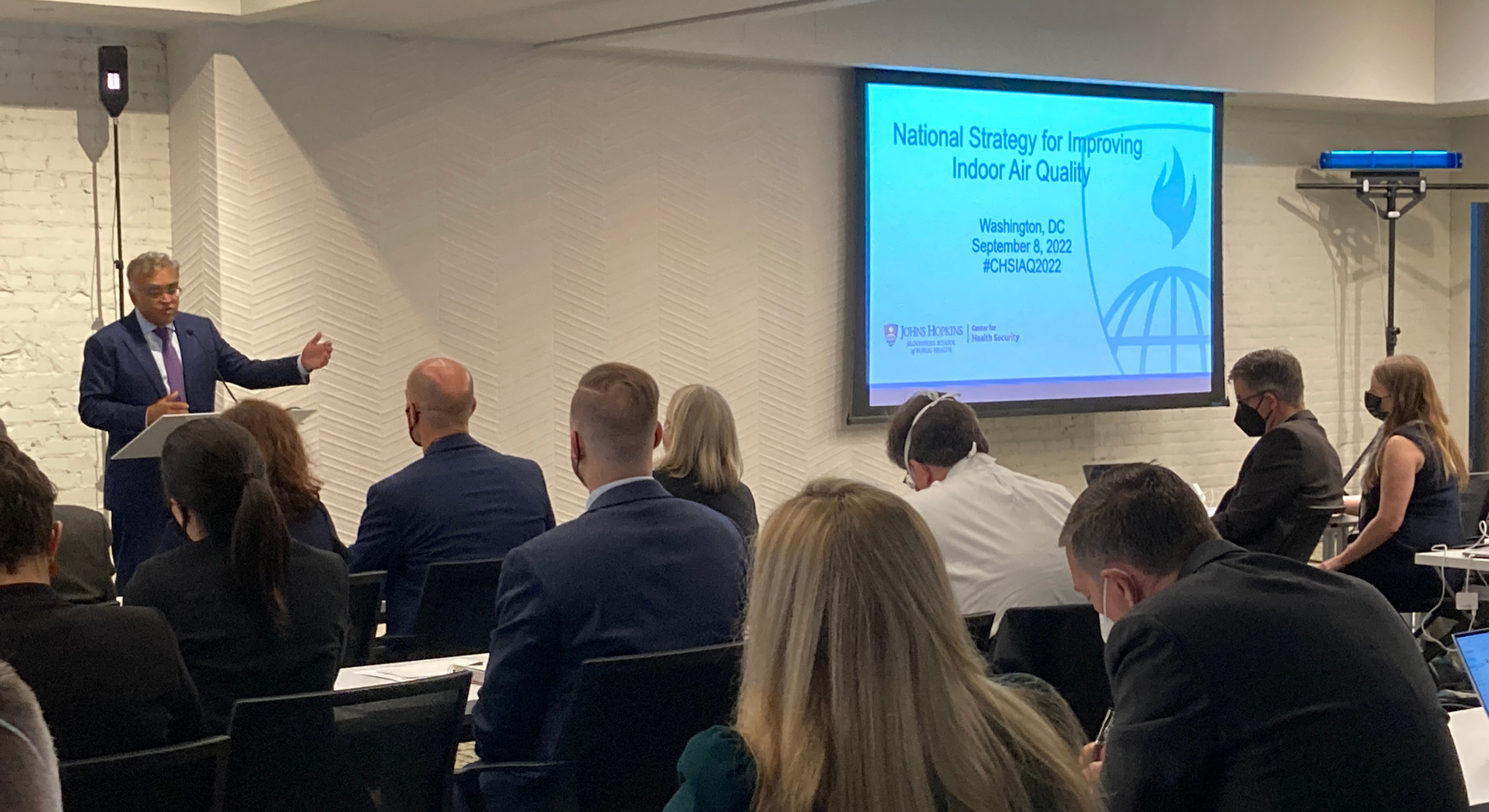
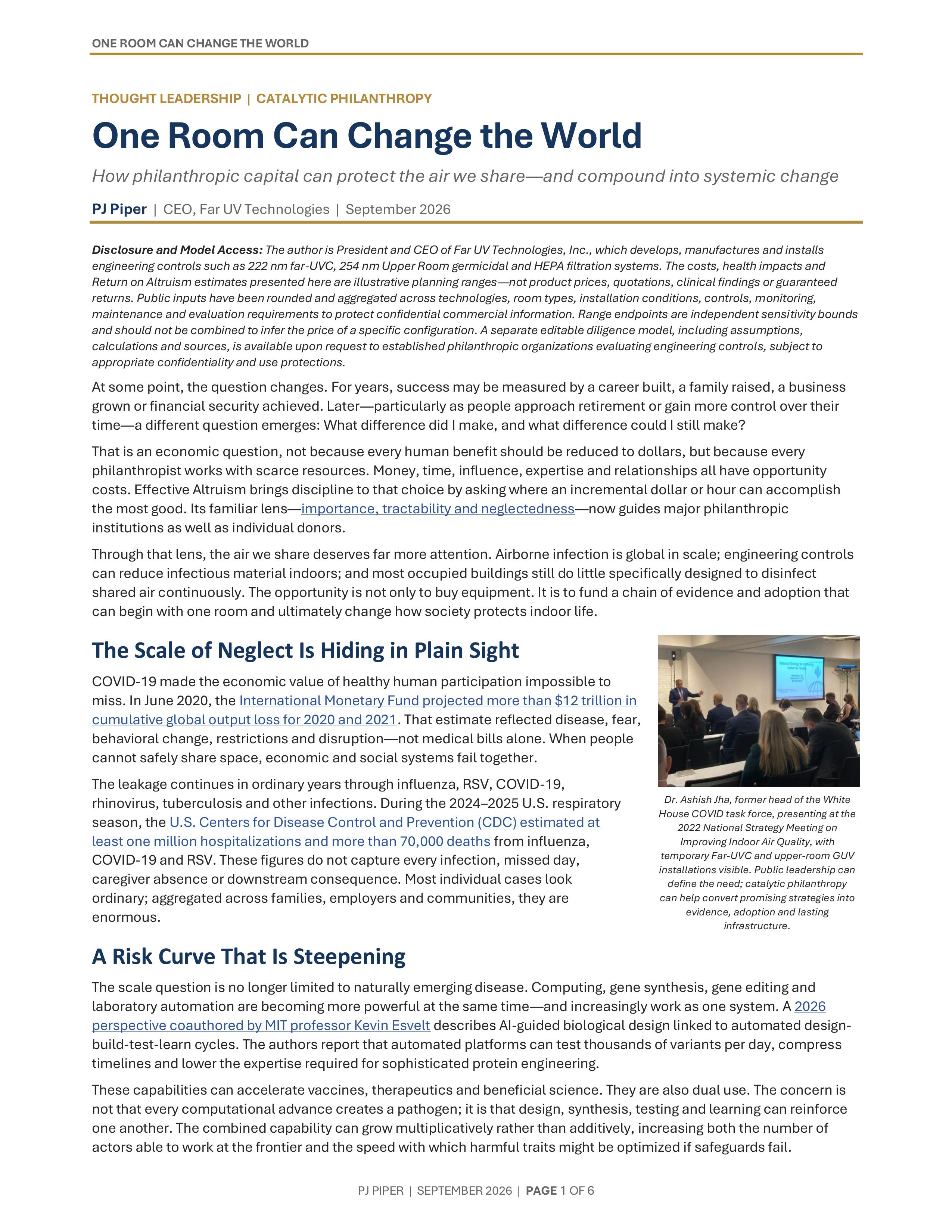
Dr. Ashish Jha, former head of the White House COVID task force, presenting at the 2022 National Strategy Meeting on Improving Indoor Air Quality, with temporary Far-UVC and upper-room GUV installations visible. Public leadership can define the need; catalytic philanthropy can help convert promising strategies into evidence, adoption and lasting infrastructure.
A Risk Curve That Is Steepening
The scale question is no longer limited to naturally emerging disease. Computing, gene synthesis, gene editing and laboratory automation are becoming more powerful at the same time—and increasingly work as one system. A 2026 perspective coauthored by MIT professor Kevin Esvelt describes AI-guided biological design linked to automated design-build-test-learn cycles. The authors report that automated platforms can test thousands of variants per day, compress timelines and lower the expertise required for sophisticated protein engineering.
These capabilities can accelerate vaccines, therapeutics and beneficial science. They are also dual use. The concern is not that every computational advance creates a pathogen; it is that design, synthesis, testing and learning can reinforce one another. The combined capability can grow multiplicatively rather than additively, increasing both the number of actors able to work at the frontier and the speed with which harmful traits might be optimized if safeguards fail.
A sufficiently transmissible and virulent engineered pathogen therefore belongs in the category of catastrophic—and, in an extreme scenario, potentially existential—risk. This risk is increasingly being cited by the CEOs of the leading Artificial Intelligence companies as a significant and immediate cause of concern. Esvelt-founded SecureBio frames the practical response as delay, detect and defend: restrict access to dangerous biological designs, detect novel outbreaks earlier and build pathogen-agnostic physical and institutional defenses that can block transmission. Cleaner indoor air sits squarely in that final layer.
Is the Problem Solvable?
There is strong evidence that germicidal ultraviolet technologies can reduce infectious material in shared air. In a hospital study in Lima, Peru, upper-room 254-nm Germicidal UV (GUV) reduced measured tuberculosis transmission through ward air by approximately 72%. A later controlled hospital study in South Africa estimated approximately 80% protection. Preliminary results from ongoing research in the same South African facility have also reported approximately 91% reduction in tuberculosis transmission using occupied-space 222-nm Whole Room Far-UVC at the highest dose tested, with lower-dose studies continuing. In these studies, infectious patients generated contaminated air under real hospital conditions and susceptible guinea pigs served as biological air samplers.
Far-UVC at 222 nanometers offers the possibility of treating a larger portion of an occupied room. In a 2022 room-scale chamber study, the highest tested configuration reduced steady-state airborne viable Staphylococcus aureus by 98.4%. That result measured pathogen burden under specified experimental conditions; it is not proof of a 98.4% reduction in human illness. Converting cleaner air into measured reductions in infection is the central evidence gap that well-designed philanthropy can help close.
The engineering proposition remains consequential. A properly designed control can operate continuously without requiring every occupant to recognize an infection or change behavior at exactly the right moment. CDC treats GUV as a supplemental air-treatment intervention, not a replacement for required ventilation and filtration, and describes 222-nm technology as emerging. The World Health Organization (WHO) recommends upper-room GUV as part of environmental controls in appropriate high-risk tuberculosis settings.
All scenarios in this paper assume installations designed and commissioned within the ACGIH 2022 threshold limit values for safe UV exposure. Measured real-world ozone increases from far-UVC at code-minimum ventilation are about 1.4 ppb as per Lawrence Berkeley National Laboratory, Columbia University and the University of Maryland, under 3% of the occupational exposure limit and roughly a tenth of typical outdoor ambient levels; laboratory emission tests have overstated real-world concentrations by more than an order of magnitude because they have often been run in non-real world sealed and/or unventilated chambers.
The Economics of the Air We Share
A useful philanthropic metric is the Disability-Adjusted Life Year, or DALY. The WHO defines one DALY as one lost year of healthy life and calculates burden as years of life lost to premature death plus years lived with disability. This allows longevity and nonfatal illness to be evaluated in a common unit: preventing a death can preserve many future years, while preventing less severe infections can preserve smaller fractions of healthy time that become meaningful when multiplied across a population.
The preliminary model accompanying this paper evaluates several philanthropically supported applications, the 15 year lifetime costs of a relevant in-room UV system (254nm or 222nm), the expected infections avoided, the total DALYs averted and the prospective Return On Altruism (ROA) assuming a $20,000 social value per DALY. The analysis intentionally excludes productivity, caregiver time, secondary transmission and pandemic option value.
| Application | Average burden per avoided infection |
15-year infections avoided |
Total DALYs averted |
Cost per DALY |
ROA at $20K |
|---|---|---|---|---|---|
| High HIV/Tuberculosis (TB) clinic | 0.683 DALY | ~269 | ~183.4 | ~$29-37 | ~540-687x |
| Overcrowded high-TB prison cell | 0.683 DALY | ~222 | ~151.6 | ~$102-128 | ~157-196x |
| Level I Emergency Department (ED) waiting room | 0.005 DALY | 10,800 | 54.0 | ~$959-1,199 | ~16.7-20.9x |
| Critical-access ED waiting room | 0.005 DALY | 480 | 2.40 | ~$2,138-2,698 | ~7.4-9.3x |
| Protected church room | 0.005 DALY | 240 | 1.20 | ~$3,559-4,369 | ~4.6-5.6x |
| 100-bed homeless shelter | ~0.0096 DALY (blended with TB risk) | ~2,421 | ~23.3 | ~$4,349-4,905 | ~4.1-4.6x |
Illustrative modeling and sensitivity analysis only. In-room UV scenarios assume an 80% reduction in setting-attributable airborne transmission and a 15-year system life. The 80% figure is drawn from upper-room GUV performance against tuberculosis in a controlled hospital ward and is applied here as a planning assumption across other pathogens and room types; the S. aureus chamber study and the ongoing South African Far-UVC results (cited above) support extending it to Far-UVC specifically, but pathogen- and setting-specific validation for non-TB respiratory viruses in occupied non-hospital spaces (ED waiting rooms, shelters, churches) has not yet been published and is exactly what the pilots proposed later in this piece are designed to establish. The homeless shelter row combines ordinary respiratory infections with a separate U.S. tuberculosis component; its 0.0096-DALY value is a blended average across modeled avoided infections. Device and installation costs and hours of operation vary between the ranges. ROA is calculated at an assumed $20,000 of social value per DALY averted.
Key sources (full derivations in the diligence model referenced above): Mphaphlele et al. 2015 (~80% upper-room UV protection against airborne TB); Banholzer et al. 2025 (South African clinic traffic and modeled Mtb risk, highest in the waiting room); WHO TB guidance (5-10% lifetime progression from Mtb infection to TB disease, higher with compromised immunity); Menzies et al. 2021 (lifetime TB DALY burden including post-TB sequelae); Johnstone- Robertson et al. 2011 (South African prison model: 230% overcrowding, ~90% annual TB transmission risk); Blanco et al. (ED influenza RR 3.29; 70.5% attributable risk); Griffin et al. 2026 (COVID-19, influenza A and RSV detected in ED waiting-room air); CDC 2024 TB surveillance + U.S. homelessness/TB review (elevated TB incidence/LTBI and recent transmission among people experiencing homelessness); Seattle shelter ARI study (respiratory-illness burden/healthcare use); and CDC Skagit choir investigation (high transmission potential during prolonged indoor singing). Protected church-room scenario is illustrative rather than an observed annual infection rate. It assumes 20 room-attributable respiratory infections annually among approximately 40 regular high-risk users, with 80% avoided by the modeled intervention. Plausibility is informed by documented high-attack-rate transmission in faith and singing settings: a CDC investigation of a 2.5-hour Skagit County choir rehearsal identified 52 secondary illnesses among 60 exposed attendees, median age 69, while an Arkansas church outbreak produced 35 confirmed cases among 92 attendees, including seven hospitalizations and three deaths. Experimental aerosol studies also show substantially higher aerosol emission during singing than speaking. Older adults and immunocompromised persons face substantially greater risk of severe influenza, COVID-19 and RSV outcomes. These modeled inputs and outputs—the 0.005, 0.008 and blended 0.0096 DALY values, setting-attributable infection counts, the 80% reduction assumption and 15-year system costs—are planning assumptions, not published clinical Far-UV cost-effectiveness results. The 0.005 average also does not separately weight low-probability, high-severity cluster events like the Skagit and Arkansas outbreaks cited above, which would raise the modeled burden and ROA if included. ROA = $20,000 divided by modeled cost per DALY.
The implied broad DALY range heavily depends on the application, including expected occupant density, time of occupancy, demographics (age, immunocompromised, etc.), type of pathogen risk and more.
How It Compares With Familiar Philanthropic Interventions
Cost alone never makes interventions comparable. The outcome, counterfactual, duration, geography and maturity of evidence matter just as much. A fair comparison therefore asks what kind of return a donor is buying and how confidently it can be attributed.
| Intervention / Application | Approx. 2026 USD per DALY averted | ROA at $20K / DALY |
|---|---|---|
| Vitamin A supplementation | ~$15 | ~1,375x |
| In-room UV: high HIV/Tuberculosis clinic | ~$29–37 | ~540-687x |
| Cataract surgery, LMICs | ~$73 | ~275x |
| In-room UV: overcrowded high-TB prison cell | ~$102–128 | ~157-196x |
| Rotavirus vaccination, LIC | ~$145 | ~138x |
| In-room UV: Level I Emergency Department waiting room | ~$959–1,199 | ~16.7-20.9x |
| HIV antiretroviral therapy | ~$1,309 | ~15.3x |
| In-room UV: protected church room | ~$3,559-4,369 | ~4.6-5.6x |
| In-room UV: 100-bed homeless shelter | ~$4,349-4,905 | ~4.1-4.6x |
| Breast-cancer screening, Peru | ~$6,000-$15,900 | ~1.3-3.3x |
Published comparison figures are approximate and inflation-adjusted to 2026 USD where the underlying estimate was reported in earlier dollars. Far-UV figures are modeled planning scenarios rather than clinical cost-effectiveness trial results. ROA = $20,000 divided by cost per DALY; the protected-church row uses the previously selected aggressive scenario.
Comparator sources (see diligence model for full workings): DCP3 Essential Surgery (2012-dollar benchmarks: vitamin A ~$10/DALY, cataract surgery ~$50/DALY, HIV ART ~$900/DALY); DCP3 RMNCH (rotavirus vaccine ~$100/DALY at Gavi pricing in LICs); Peru breast-cancer analysis ($4,125-$10,939/DALY in 2012 USD for screening combinations); BLS 2012 CPI-U (annual average 229.594) and BLS July 2026 CPI-U (333.918). Historical 2012-dollar benchmarks were multiplied by ~1.454 (333.918/229.594) to express approximate 2026 USD. This inflation adjustment improves nominal comparability but does not imply local program costs moved exactly with U.S. CPI. Far-UV rows remain modeled planning scenarios.
Cleaner air should not be marketed as a replacement for proven global-health giving. Its case is different: one capital asset may reduce exposure to many pathogens while also generating access, continuity and resilience. The proper next step is to determine, setting by setting, whether that broader portfolio of benefits compensates for today’s greater uncertainty.
Clean-air infrastructure may ultimately have a broader return profile than a single-disease intervention. It can address multiple respiratory pathogens, preserve healthy time, reduce operational disruption, protect people who cannot mount strong immune responses and retain option value against an unfamiliar pathogen. Those additional benefits should be measured where possible. The disciplined conclusion is that the preliminary economics justify pilots designed to replace assumptions with observed outcomes.
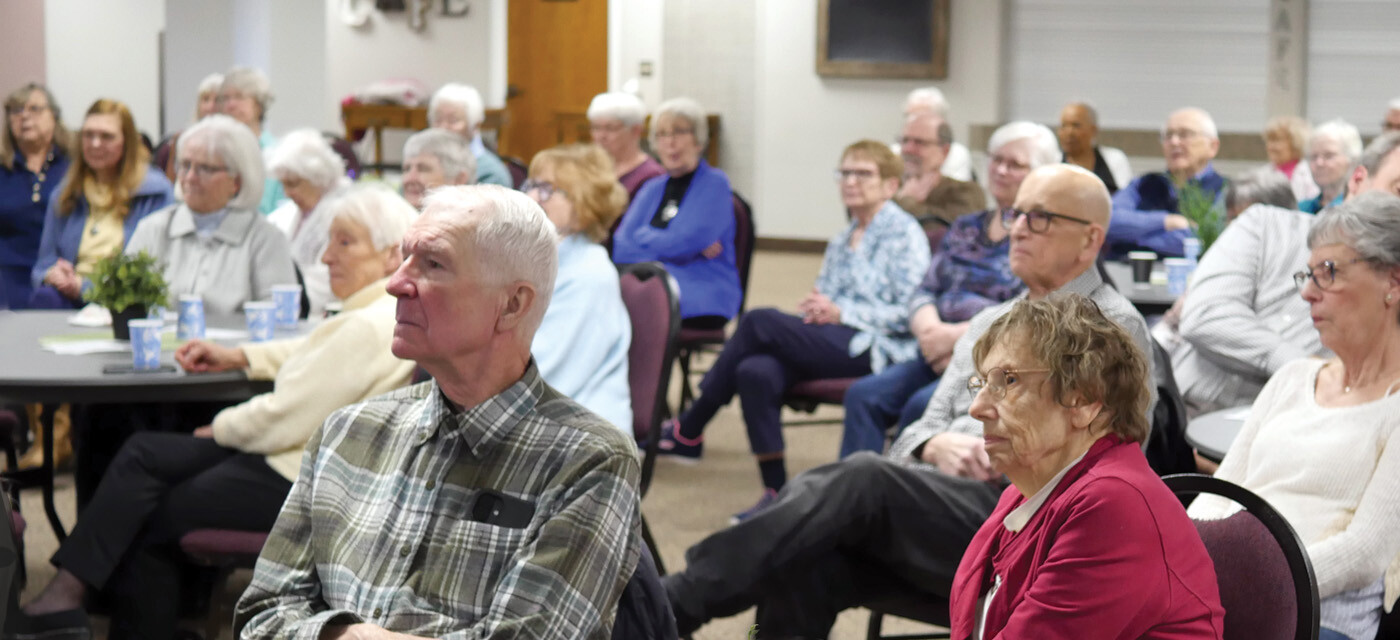
Return on Altruism is not necessarily limited to the health burden that conventional DALY or QALY accounting can measure. A modest investment that makes a shared community space meaningfully safer may also restore access to activities that vulnerable people would otherwise avoid.
Big Philanthropy Is Beginning to Notice
The Effective Altruism framework is increasingly visible in large-scale giving. Open Philanthropy—renamed Coefficient Giving in 2025—says it has directed more than $4 billion in grants since 2014 and now operates funds for air quality, biosecurity and pandemic preparedness, global catastrophic risks, global health and other neglected opportunities. The institutional language is revealing: select causes carefully, pool capital and look for a coefficient that multiplies the donor’s impact.
Intercept makes that trend concrete. Launched as a $500 million philanthropic initiative, it aims to reduce and eventually eliminate respiratory infections through broad-spectrum preventatives and air-cleaning technologies. Its air-cleaning target is to safely reduce infectious aerosols by more than 75% and create a path toward adoption in more than half of transmission-relevant indoor spaces.
The coalition is unusually broad. Intercept’s public funder roster names Patrick and John Collison, a dozen individuals from Jane Street, Bill Gates through a philanthropic entity, Coefficient Giving and Anthropic employees contributing in their individual capacities. The larger point is not branding. It is convergence: technologists, investors, foundations and individual donors are beginning to treat respiratory infection and cleaner air as a tractable, fundable system problem.
From Donation to Catalytic Capital
A philanthropic installation becomes catalytic when it is designed to unlock the next decision. The room demonstrates feasibility and creates awareness. The facility shows that deployment can work across varied spaces. A controlled pilot produces evidence. A community network tests repeatability and economies of scale. System deployment embeds the intervention in standards, budgets and procurement. Each stage can increase the value of the stage before it.
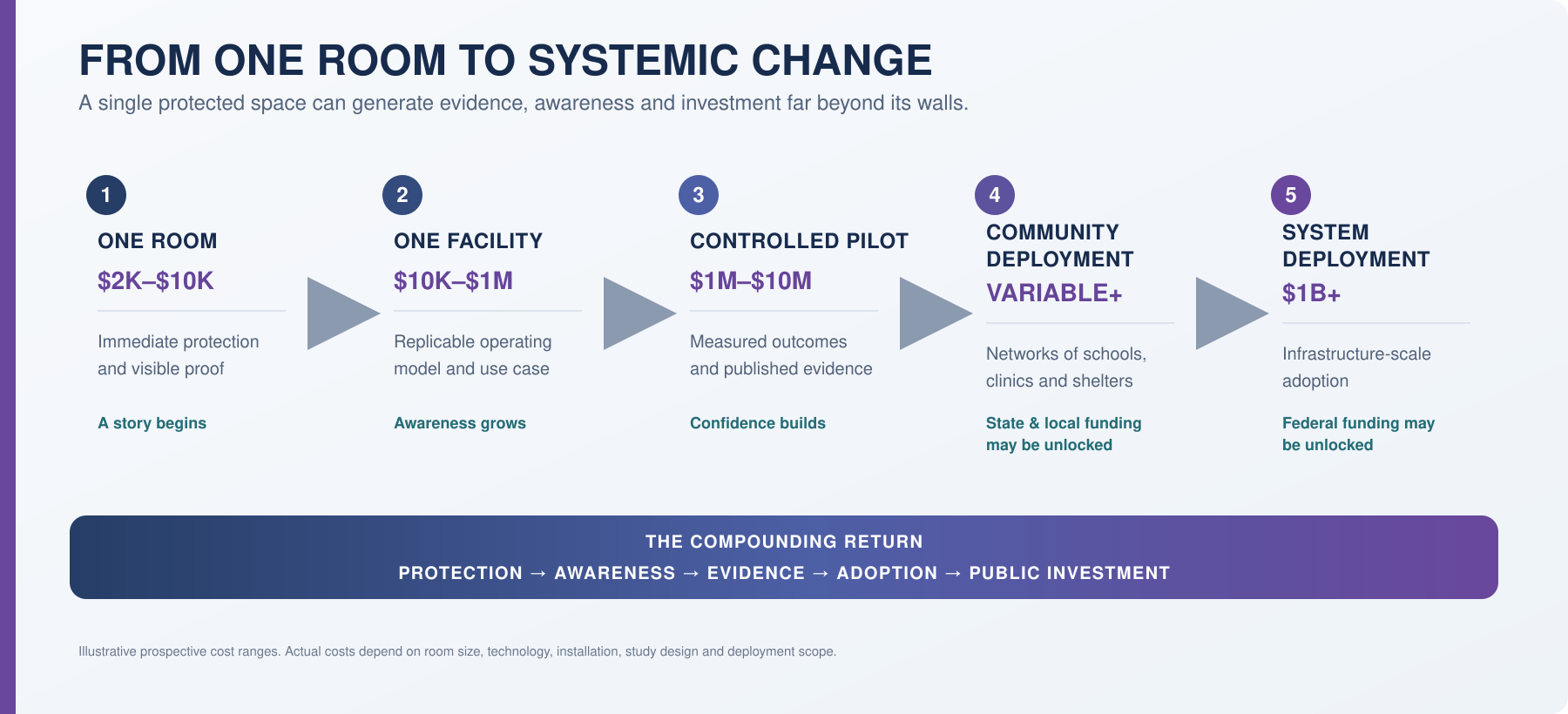
These ranges are prospective order-of-magnitude planning figures, not bids or budgets. Building size, electrical and HVAC conditions, monitoring, controls, study design, installation requirements and regulatory context can move actual costs substantially. Their purpose is to show that there is no single minimum scale for participation—and that the value of an installation includes the awareness, learning and follow-on capital it can mobilize.
What a Credible Pilot Must Measure
The next philanthropic dollar should buy evidence as well as equipment. A persuasive pilot begins with a written theory of change, a baseline period, comparison rooms or facilities where feasible, and outcomes chosen before the results are known. It records not only whether a fixture operated, but whether exposure conditions changed, whether illness changed and whether the change was economically meaningful.
| Measure | Minimum dataset | Decision it informs |
|---|---|---|
| Exposure & delivery | Occupancy, ventilation, aerosol measures, output, runtime, maintenance and downtime | Whether spaces were comparable and performance persisted outside the laboratory |
| Health | Symptoms, laboratory-confirmed infections, severity and healthy time lost | Whether cleaner air translated into fewer or less consequential illnesses |
| Operations | Absence, staffing substitutions, closures and service interruptions | Whether the intervention preserved participation and resilience |
| Economics & equity | Lifecycle cost, healthcare use, caregiver time and access for vulnerable groups | Cost per outcome, distribution of benefit and the case for scale |
Preregistration, independent analysis and publication of null or negative results are not bureaucratic extras; they are part of the philanthropic return. A failed hypothesis can prevent millions of dollars from following the wrong signal. A strong result, transparently produced, can travel far beyond the original building.
Impact Is Not Limited to Writing a Check
A retired hospital executive may know health-system leaders. An educator may know a superintendent. A banker may know a shelter foundation. A military officer may know readiness decisionmakers. A physician can help design a credible trial; an engineer can assess a building; a lawyer can structure a program; a communicator can make the evidence legible; a congregation can crowdfund one room. Money, expertise, reputation, introductions and time are all forms of philanthropic capital.
That makes the opportunity unusually democratic. The person who makes one decisive introduction may create more leverage than the person who writes the largest check. A family, civic group, employer or foundation can begin at a scale it can responsibly support, provided the work is documented so others can learn from it.
One Room Can Matter
A single protected room in a church could allow an older or immunocompromised member to attend a small service. In a clinic, it could improve the waiting environment for people receiving chemotherapy or transplant care. In a school, daycare, shelter, veterans’ facility, polling location or community center, it could reduce exposure where avoidance is difficult and participation matters. CDC treats cleaner air as a core respiratory-virus prevention strategy.
Cleaner shared air has an unusual equity advantage: it can benefit vulnerable people without requiring them to disclose a diagnosis, request special treatment or separate themselves from everyone else. Whether a particular technology is legally required in a specific setting is a separate, fact-dependent question. As practical accommodation and public-health infrastructure, however, the agnostic benefit is shared, making it ideal for catalytic philanthropy at any scale.
The Compounding Power of One Room
Prevention is chronically undervalued because its return is an event that never occurs: the hospital admission, missed school day, caregiver absence, interrupted service or transmission chain that does not happen. The economics of philanthropy asks us to value preserved healthy life and human participation even when the benefit leaves no photograph behind.
This is not an argument that every room requires in-room ultraviolet disinfection. Ventilation, filtration, vaccination, hygiene and source control remain complementary, and the scientific questions are not finished. It is an argument that airborne infection is enormous in scale, increasingly tractable, exposed to a steepening tail risk and well suited to disciplined philanthropic experimentation.
Protect a room. Measure the air. Track infections and absences. Publish the cost and the outcome. If the evidence is weak, learn quickly. If it is strong, use it to unlock a facility, a pilot, a network and ultimately a system. That is how a modest act becomes catalytic—and how an opportunity available to almost anyone can help everyone change the world.
Author’s note: The DALY model and deployment costs are preliminary planning scenarios supplied with this paper. They are not clinical findings, price quotations or investment recommendations. This essay is not medical or legal advice.